 Tony Wagner’s book, The Global Achievement Gap, explains the competencies high school and college graduates need in order to be successful young professionals and global citizens in today’s society. Wagner explains how much of the way we go about traditional schooling is truly obsolete, and he challenges educators to redefine what we mean by a rigorous curriculum and schooling experience. To help students become the “knowledge workers” we need for the 21st century, and to remain competitive as a nation, Wagner outlines these 7 survival skills below, which have been informed by interviews with business leaders and educators across the nation at every level.
So frequently, parents and teachers get caught up in short term education problem solving. Parents and teachers, naturally, become narrowly focused on an upcoming standardized test or the content demands of a particular course or grade level. In fact, we see this happen at every type of school–public, charter, and private. However, if we all take a step back, and spend some time in the helicopter rather than the blender, we can see what really matters. This reflection rarely happens for a teacher working in isolation. In order to effectively assess one’s teaching practice and raise the bar on teaching and learning, educators must work collaboratively and constructively, a model that happens much less frequently than you might imagine, even at the most elite schools.
Since learning is a lifelong journey, our goal as educators must be to help our students meet the demands of today’s world – with consideration for these 7 survival skills – while also helping students to remain engaged, motivated, and curious. Learning should be meaningful and applicable. Two of the most important skills we can help our children master is the ability to research and communicate effectively, both verbally and in writing. At all grade levels, we need to stretch our children’s ability to think critically, synthesize information, and present their findings. When we tutor students at My Learning Springboard, we consider the investment in lifelong skills and use each assignment as an opportunity to develop these competencies. We never lose sight of our role as mentors.
By Brad Hoffman, M.S.Ed.Board Certified Educational Planner and Learning Specialist
My Learning Springboard
7 Survival Skills For 21st Century Students
From Tony Wagner’s website:
CRITICAL THINKING AND PROBLEM SOLVING
“The idea that a company’s senior leaders have all the answers and can solve problems by themselves has gone completely by the wayside…The person who’s close to the work has to have strong analytic skills. You have to be rigorous: test your assumptions, don’t take things at face value, don’t go in with preconceived ideas that you’re trying to prove.”
—Ellen Kumata, consultant to Fortune 200 companies
COLLABORATION ACROSS NETWORKS AND LEADING BY INFLUENCE
“The biggest problem we have in the company as a whole is finding people capable of exerting leadership across the board…Our mantra is that you lead by influence, rather than authority.”
—Mark Chandler, Senior Vice President and General Counsel at Cisco
AGILITY AND ADAPTABILITY
“I’ve been here four years, and we’ve done fundamental reorganization every year because of changes in the business…I can guarantee the job I hire someone to do will change or may not exist in the future, so this is why adaptability and learning skills are more important than technical skills.”
—Clay Parker, President of Chemical Management Division of BOC Edwards
INITIATIVE AND ENTREPRENEURSHIP
“For our production and crafts staff, the hourly workers, we need self-directed people…who can find creative solutions to some very tough, challenging problems.”
—Mark Maddox, Human Resources Manager at Unilever Foods North America
EFFECTIVE ORAL AND WRITTEN COMMUNICATION
“The biggest skill people are missing is the ability to communicate: both written and oral presentations. It’s a huge problem for us.”
—Annmarie Neal, Vice President for Talent Management at Cisco Systems
ACCESSING AND ANALYZING INFORMATION
“There is so much information available that it is almost too much, and if people aren’t prepared to process the information effectively, it almost freezes them in their steps.”
—Mike Summers, Vice President for Global Talent Management at Dell
CURIOSITY AND IMAGINATION
“Our old idea is that work is defined by employers and that employees have to do whatever the employer wants…but actually, you would like him to come up with an interpretation that you like—he’s adding something personal—a creative element.”
—Michael Jung, Senior Consultant at McKinsey and Company
 No matter their students’ location or grade level, there are a number of key messages that educators need to communicate to students in order to help them to be effective learners and to see their teacher(s) as an integral part of supporting them in the learning process. Key messages are the core concepts that a speaker wants their audience (in this case, students) to hear and remember and, most importantly, believe. Effective key messages both resonate in the moment and stay with the listeners long after they first hear the messages.
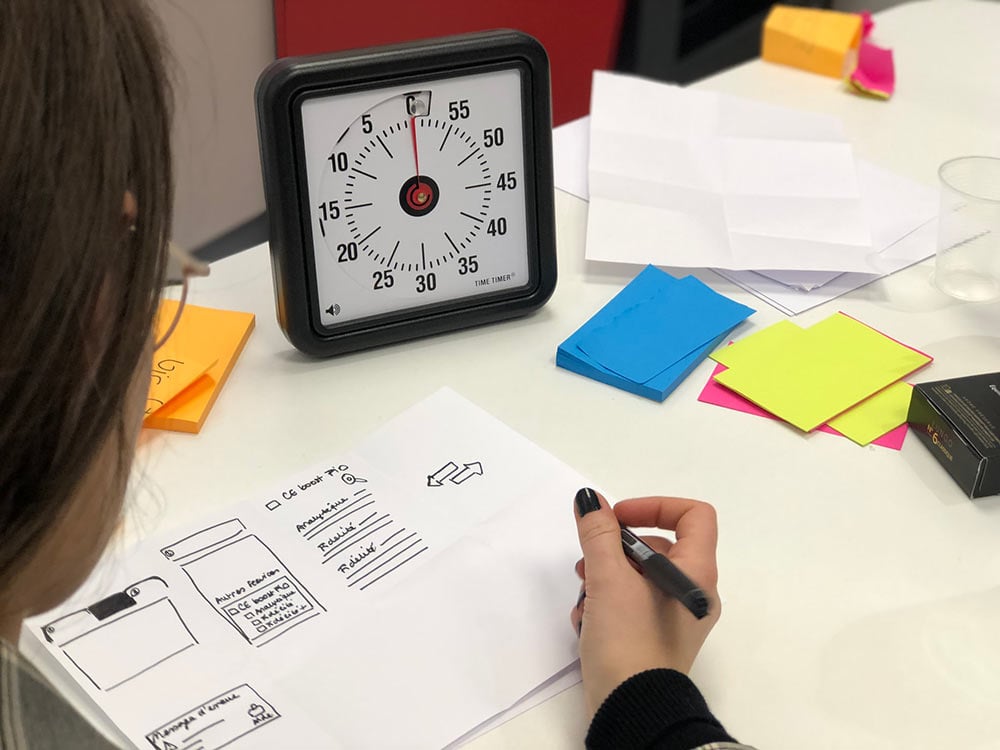 In 2015, the ACT essay section was revised to include more challenging writing prompts. And yet, as a tutor for the ACT, I find the revised format provides more ways to simplify the writing process. Every essay that a student writes for the ACT requires
  As the coronavirus pandemic continues and we all settle into
  The COVID-19 pandemic took us all by surprise. As we collectively braced ourselves for a different reality and adjusted to our new normal, our students’ school experience changed dramatically and shifted to online learning. Educators around the country took to the internet and quickly engineered a classroom experience without the classroom.