 The antidote to skill gaps is high-dosage tutoring, which is generally defined as intensive 1:1 tutoring at least 3x per week, or for about 50 hours over a semester. We’ve seen an increase in the requests for high-dosage tutoring over the past 18 months, and this trend has continued this fall.
Academic Concerns
Our conversations with parents and school faculty in addition to our own observations confirm the following concerns across the curriculum:
- Writing skills across all grade levels, and for all writing purposes (e.g narrative, informational, and persuasive), needs improvement. Subcategories of writing work include:
- Prewriting strategies
- Basic and advanced grammar and syntax
- Sentence fluency and varying sentence structures
- Transition words and phrases
- Sequencing and chunking ideas to create effective, multi-paragraph pieces
- Incorporating quotations and citing references
- Systematically editing and proofreading
- Incorporating stronger vocabulary
- Improving close reading skills, including note taking, annotating, and properly outlining, is a common need for students in the upper elementary, middle, and high school divisions.
- Decoding, reading fluency, and comprehension work with students in elementary and middle school, which includes effectively summarizing texts and determining / justifying the main idea of a non-fiction text.
- Automaticity of basic math facts (all four operations).
- Work with fractions is complex and spans common fractions, decimal fractions and percentages. We see a lot of skill gaps here.
- Algebraic reasoning and foundational geometry skills as related to advanced math pathways in middle and high school.
- Executive function skill building, particularly as it relates to work prioritization, goal setting, time management, minimizing distractions, and developing enhanced metacognition so that a student learns to set themself up for optimal performance under particular circumstances.
Standardized Testing Requirements
As a result of academic doubt, we’ve seen a return to admissions testing requirements at most NYC day schools and some highly selective boarding schools in addition to many colleges. Despite the continued use of “test-optional” language at various schools, this testing is NOT really optional for everyone. It remains a filter.
We continue to help our students achieve success with school and college admissions because we continue to take the harder, more steady road exceeding expectations everywhere we can. Students engaged in ISEE, SSAT, ACT or SAT work have the specific advantage of auditing prerequisite skills and systematically closing any gaps before moving onto accelerated instruction. Submitting strong test scores continues to be a way to demonstrate academic mastery in a climate where there is considerable doubt. Moreover, “holistic reviews” by admissions committees take each student’s specific context into consideration, so “being competitive” is relative to each student’s situation and environment.
Scheduling A Planning Meeting
With most planning and establishing new routines, it’s important to not let perfect be the enemy of good. Plans can always be tweaked or recalibrated as more information becomes available. With that in mind, if you have any questions or concerns about your child’s academic performance, or if you have an interest in pursuing a private school or college admissions process, please contact us to schedule an appointment for further discussion without delay!
By Brad Hoffman, M.S.Ed., Board Certified Educational Planner, and Faya Hoffman, M.A., Board Certified Educational Planner
 Short-term tutoring is intended to build specific skills and ultimately lead to improved effectiveness and independence. The effort scope — frequency, duration and total instructional time — is driven by a family’s specific goals and benchmarking data.


 Families change schools for a variety of reasons at different ages and grade levels. The most common reasons include aging out, relocating, leapfrogging, or not recontracting with your current school. Indeed there’s some overlap between these four categories.
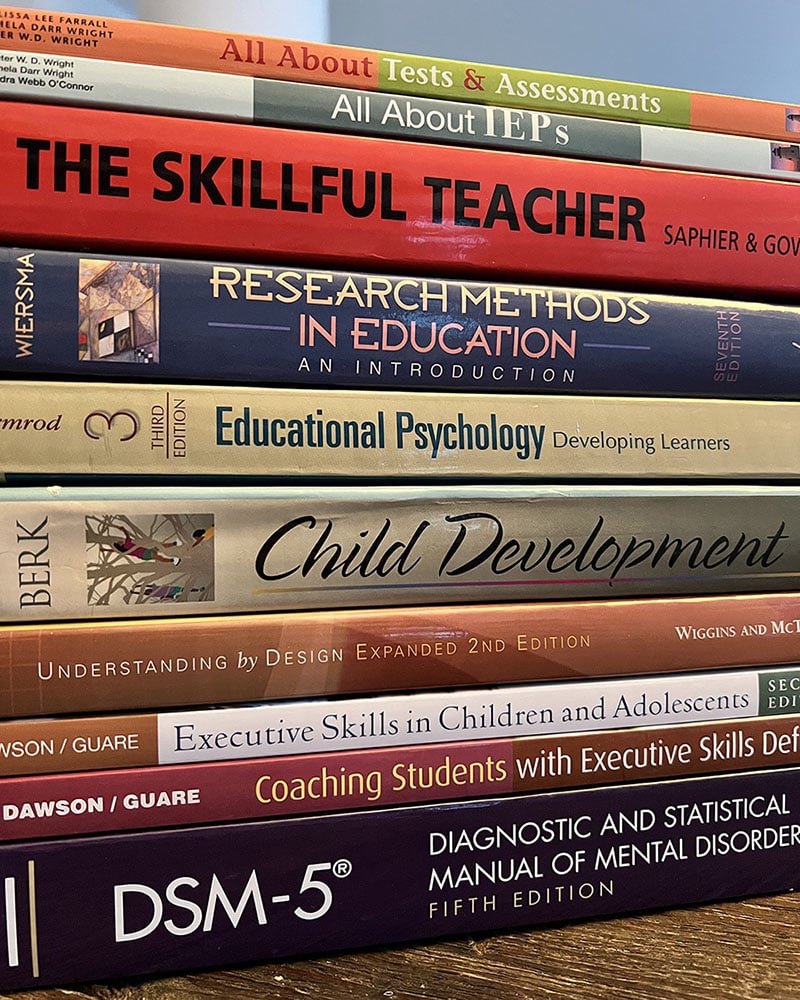 Skillful teachers make all the difference. Think back to your own classroom and learning experiences over the years. Which teachers were your favorites? Which teachers had a significant positive impact on your growth and development? Which teachers pushed you in appropriately challenging ways? Which teachers really “saw” you and “heard” you and brought out the best in you? What specific qualities or practices created these memories for you?