 Short-term tutoring is intended to build specific skills and ultimately lead to improved effectiveness and independence. The effort scope — frequency, duration and total instructional time — is driven by a family’s specific goals and benchmarking data.
At My Learning Springboard, our approach to short-term tutoring is quite different. We work in small teaching teams and closely partner with parents and any other professionals with whom a family might want involved.
Every family benefits from a minimum of three (3) educators: Brad Hoffman and Faya Hoffman, who are both Learning Specialists and the co-founders, as well as the tutor who meets in person or remotely with a student per a family’s preference. This approach ensures collaboration, shared expertise, and privacy. Checks and balances are built into the process to be sure that the work is focused and targeted. All engagements are at will and incremental decision making is encouraged.
Key Questions To Inform Short-Term Tutoring Planning
- What is currently observed at home and at school?
- How is my student performing now?
- What is the desired outcome?
Through discussion and close partnership, meaningful planning unfolds. Tutoring efforts range from a single session, to a multi-week engagement, to a longer-term engagement depending on the specific needs and situation.
Short-term tutoring efforts include but are not limited to the following areas:
Language Arts
- Reading support targeting decoding, comprehension, and fluency.
- Effectively summarizing fiction text to include the title, author, setting (time and place), major characters, theme, rising action, climax, and resolution.
- Effectively summarizing non-fiction text to include the source, author, date, main idea, and relevant details that justify the stated main idea.
- Creating a structure to build vocabulary at any age.
- Writing legibly in manuscript or cursive, which we still believe has an incredible value even in an age of keyboarding and dictation.
- Developing a 5-paragraph persuasive essay.
- Effectively writing at the paragraph and multi-paragraph level in a way that demonstrates strong organization, varied sentence structure (sentence fluency), and word choice as well as the integration of text evidence and/or supporting details to demonstrate comprehension and/or make compelling arguments.
- Effectively proofreading and editing for proper syntax (grammar), accurate spelling, and punctuation.
- Incorporating dialogue and quotations with correct punctuation usage.
- Studying grammar and applying techniques in order to achieve varied sentence structure. For example, what is a preposition and how does that help me to open with prepositional phrases? What is a noun, a verb and, specifically, a present participle, and how does that help me to start with a gerund? What is a conjunction and how do I combine sentences with correct comma usage? Let’s not rely entirely on tools like Grammarly without an underlying understanding of grammar rules!
- Making use of student statements and personal statements for middle school, high school, and college admissions processes to teach the above described writing skills.
Mathematics
- Automaticity of basic facts in all four (4) number operations, including addition, subtraction, multiplication, and division.
- Multiplication with multi-digit numbers and decimals.
- Long division with multi-digit numbers and decimals.
- Effectively working with fractions, including common fractions, decimal fractions, and percentages.
- Algebraic reasoning from an introductory level at the elementary grades and progressing through middle school.
- Math problem solving at the elementary and middle school levels that emphasizes universal problem-solving strategies, such as “working backwards,” “making a diagram”, “looking for a pattern”, or “using logical reasoning”.
- Reasoning through multi-step word problems that integrate various concepts and skills.
Foundational Technology Skills
- Developing typing skills with fingers on the home keys and eyes on the monitor.
- Effectively organizing an email inbox by using labels, filters, color coding, and archiving.
- Effectively using Google Calendar in conjunction with school-based portals and making use of advanced functionality, including sub calendars, color coding, and accepting and sending calendar invitations.
- Effectively organizing Google Drive using specific and intentional file names and subfolders, adding shortcuts, and moving files within a student’s “My Drive” main folder or from a student’s “Shared With Me” folder and into their “My Drive”.
- Effectively formatting and editing a Google Sheet using text wrapping, freezing rows and columns, inserting hard returns for visual tracking, and applying a spelling check within a Google Sheet and its worksheet tabs.
- Effectively formatting a Google Drive document using horizontal and vertical text alignment, page margins, tables, bullets and numbered lists, indenting features, and applying a spelling and grammar check.
- Managing sharing settings for Google Drive folders, subfolders, and individual documents and sheets.
- Guiding conversations about AI-related topics and related academic integrity.
- Assessing the quality and accuracy of sources as well as fact-checking tactics.
Organizational and Study Skills
- Developing tactics for improved time management, goal setting, and self assessment.
- Organizational coaching leading up to midterms, final exams, or surrounding specific project efforts.
- Making use of a specific research project to teach students how to determine reputable sources, aggregate information across sources, and strategically use these sources to defend their thesis statement? How can a student more effectively take advantage of office hours and in-school resources to support their drafting process?
- Taking advantage of an upcoming assessment to scaffold what it means to study for this subject matter. How should a student backmap their studying from an expected test date? How should a student make use of class notes, previous quizzes and homework assignments, and other classroom resources to effectively study? How can a student more effectively self-advocate and take advantage of office hours and in-school resources in preparation for an assessment?
- Preparing for standardized tests, including the ISEE, SSAT, ACT, or SAT among other tests.
- College essay coaching and related project management and organizational skill building.
Enrichment Teaching, Internships, and Career Readiness
- Independent study with a faculty mentor in any discipline, including but not limited to STEM, creative writing, humanities, or the arts
- Researching internship opportunities at the high school or college level while developing specific skills related to drafting cover letters and resumes as well as interview preparation
- Creating and enhancing LinkedIn profiles for professional endeavors
Related Posts
These links below provide more information about our differentiated approach and value proposition with regard to short-term tutoring:
- Overview of Private Tutoring Opportunities
- Understanding the Value of Tutoring and Test Preparation with My Learning Springboard
- Redefining Educational Consulting
- A Master Teacher Can Really Make The Difference
- A Different Tutoring Experience With My Learning Springboard
To learn more about short-term tutoring for your student, please contact us to schedule a planning meeting so that we can better understand your needs and priorities and further discuss an approach that will work best for your family.
By Brad Hoffman and Faya Hoffman, Board Certified Educational Planners and Learning Specialists


 Families change schools for a variety of reasons at different ages and grade levels. The most common reasons include aging out, relocating, leapfrogging, or not recontracting with your current school. Indeed there’s some overlap between these four categories.
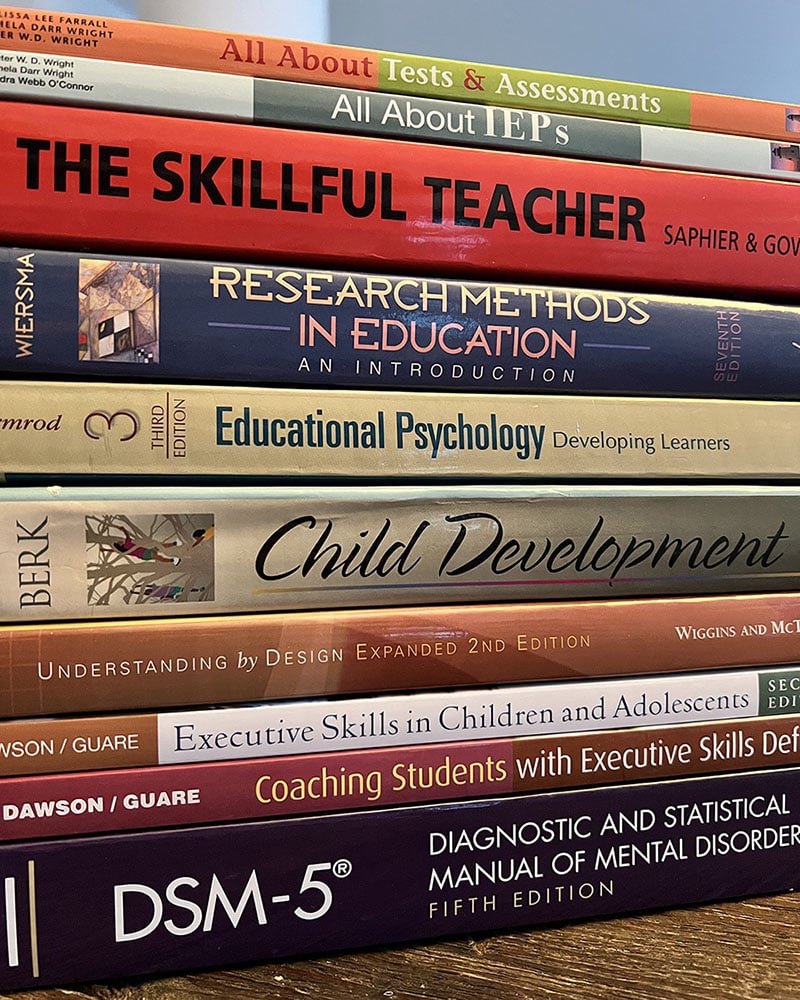 Skillful teachers make all the difference. Think back to your own classroom and learning experiences over the years. Which teachers were your favorites? Which teachers had a significant positive impact on your growth and development? Which teachers pushed you in appropriately challenging ways? Which teachers really “saw” you and “heard” you and brought out the best in you? What specific qualities or practices created these memories for you?
 If you have a 7th grade student, this school year is really important as you consider your 9th grade plans. Students and families interested in competitive day schools and boarding schools alike need to treat 7th grade with great care. It’s 7th grade performance that will matter the most during the fall admissions season that unfolds most typically from September through January of a student’s 8th grade year. High school admissions directors will be carefully considering the following criteria in a holistic review application process: