By Dominic O’Brien
Original Source: Edutopia
Originally posted May 20, 2014
As a student, I had great difficulty concentrating during lessons, and consequently didn’t retain much knowledge. I was diagnosed with dyslexia and had the symptoms of attention deficit disorder. Academic information just didn’t get through to me.
Here are samples of reports that my teachers sent home when I was ten:
- “He tends to dream in the middle of a calculation which leads him to lose track of the thought.”
- “Terribly slow. Often cannot repeat the question. Must concentrate.”
- “Unless Dominic really shakes himself up and gets down to work, he is not going to achieve any success . . . he is painfully slow.”
The comments contained no evidence that I would one day become an eight-time World Memory Champion and author of over a dozen books and courses on memory training. So what happened?
In 1987, I watched a man on television memorize a shuffled deck of playing cards in just under three minutes. As corny as it may sound, that moment changed my life.
I taught myself to memorize playing cards and realized that the strategy I was developing could be used to remember anything. Today, when I appear on TV and radio shows, one question is always asked: “Why don’t they teach this stuff in schools?” Had I acquired those skills when I was a student, I could have achieved exam success, gone onto higher education, and actually enjoyed the learning process. Instead, I suffered low self-esteem and dropped out of school when I was 16.
Teaching Basic Memory Skills
Here are five strategies that will help students remember academic information:
1. The Story Method
To remember a set of information, create a story that links all the elements together. In chemistry, for example, the noble gases are helium, neon, argon, krypton, xenon and radon. Imagine taking off in a helium balloon lit up with a neon light. An argon welder turns into Superman, who takes you to the planet Krypton, and so on.
2. Numeral Shapes
To remember numerical information, give each numeral a picture code. For example, 2 is shaped like a swan, and 9 resembles a balloon and string. To remember that Queen Victoria had nine children, imagine her holding a balloon and string.
3. The Link Method
To remember foreign vocabulary, find a link between the sound of a foreign word and its meaning. For example, the German word for “bone” is knochen, so imagine the pain involved in “knocking” a bone in your leg. You can remember the Spanish word for “boat” – barco — by imagining that a boat has a large “barcode” on its side, or picture a dog “barking” on a boat.
4. The Journey Method
To remember a list, choose a familiar journey, maybe around your house, and picture each item on the list at specific locations. Test your class with a random list of 20 objects, then get them to imagine each item along a 20-stage route around their house. The same method can then be applied to remembering practical information such as the Periodic Table of Elements or the U.S. presidents.
5. The Rule of Five
To avoid having information gradually fade from your memory banks, it’s important to know when to review information. Apply the Rule of Five:
- First review: immediately
- Second review: 24 hours later
- Third review: one week later
- Fourth review: one month later
- Fifth review: three months
Tapping Potential
To date, I have taught over 10,000 schoolchildren basic memory skills. Typically, I get a volunteer to write down and call out a random 60-digit number, which I then repeat forwards and backwards having heard the number just once.
The faces register amazement. However, the real payoff is when I ask, “Would you like to be able to do that, too?”
“Yeeeeeeeees!”
Next, we discuss how easy and fun learning could be if they knew the secret. After all, if a dyslexic kid can go on to become a World Memory Champion, then all children are potential memory champions.
 Math is everywhere. From the buildings, streets, and parks you see around you that were built using math; to the cars and trains you ride in that are run using complicated equations; to the decisions at the grocery store and in restaurants that we make on a daily basis, math surrounds us. Why is it such a scary subject in schools? Why do so many students have a
 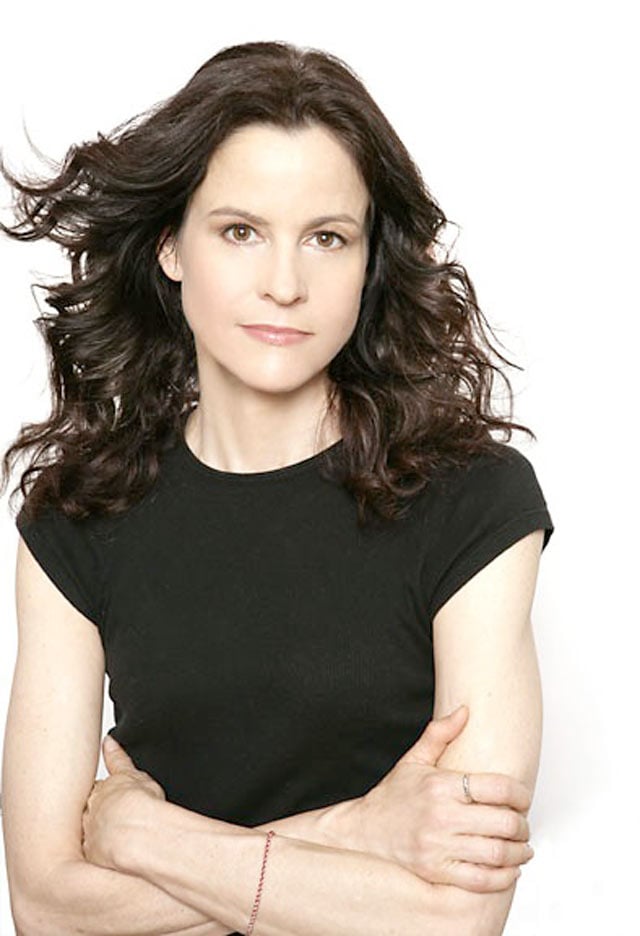 Ally Sheedy has been working in film, television and theatre since she was 15 years old. She started off doing television commercials while in high school, and attended the University of Southern California as a student in the BFA theatre program. While pursuing her studies in theatre, Ally shot several successful films, including: War Games, directed by John Badham; The Breakfast Club, directed by John Hughes; St. Elmo’s Fire, directed by Joel Schumacher; and Twice In A Lifetime, directed by Bud Yorkin, starring Gene Hackman, Ellen Burstyn, and Ann Margret. Ally also worked one summer at The Denver Center for the Performing Arts.
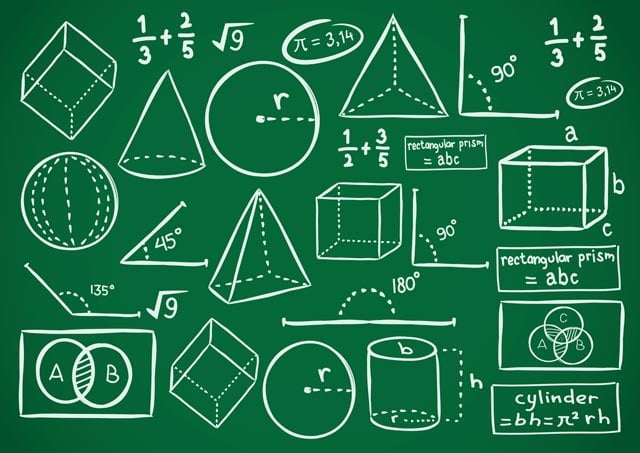 There’s something about being naturally good at math that makes people believe you’re exceptionally intelligent. There’s a mystique about math; the idea that only a few gifted people are able to do it. Conversely, I’ve lost count of the number of parents who have warned me that they have no ‘math brain’ and that their son or daughter has inherited this lack of ability.
 Although deeply fond of his native Medellin, Colombia, Jose Bladimir Parra was always in love with American culture, including its traditions, its music, and the English language. He first dreamt about living in the United States when he was twelve-years-old: he thought living in the United States would be the ideal way to learn English. After graduating from the National University of Colombia as an Industrial Engineer, he worked in the engineering field for about eight years before moving to South Florida, where he soon became a family man.