 No matter their students’ location or grade level, there are a number of key messages that educators need to communicate to students in order to help them to be effective learners and to see their teacher(s) as an integral part of supporting them in the learning process. Key messages are the core concepts that a speaker wants their audience (in this case, students) to hear and remember and, most importantly, believe. Effective key messages both resonate in the moment and stay with the listeners long after they first hear the messages.
Maslow’s hierarchy reminds us as educators that students’ needs for safety, belonging, and self-confidence must be addressed in order for them to learn academic material effectively. With these considerations in mind, our key messages for students are based not in scholastic content but in social-emotional principles. These messages help students see that achievements that may feel unreachable to them now will be reachable soon. These messages encourage social-emotional learning transfer by helping students identify and activate positive attributes they already possess, as well as by helping them cultivate new ones. These messages encourage students to take intellectual risks — an essential aspect of being a fully actualized learner — by reassuring them that they have a safety net and that the teacher believes in the student and their ability. These messages help learners build stamina and give them the confidence to persist when learning is challenging — both when the educator is there beside them and when the student is working independently. These messages help students conceptualize their work with their teacher as something that helps them both in the immediate moment and in the long term.
The key messages below should be shared directly with your students as well as embedded implicitly in your communications with them during each interaction. Repeated use makes a critical difference.
My Learning Springboard believes in these key messages for our students:
- Our work together is important.
- You can do this.
- I am here for you and won’t give up on you.
- Learning new things can be hard, but remember you’ve done hard things before (remember when you…).
- You may not be able to do this YET, but the key word is “yet.”
- Effective effort + persistence = success.
Think back to a time when you struggled alone with something as a learner — perhaps when you floundered in isolation, felt misunderstood, or were hesitant to ask for assistance. Imagine how things could have been different if you had been able to work with a teacher who was consistently encouraging and who made it safe to ask for help. How could hearing these key messages have benefited you as you tried to master that concept or skill set? We believe that these messages could have let you know that you were not alone, that someone cared about you and believed in you, that some struggle is an integral part of learning, and that your efforts would be fruitful in the end. With that growth mindset and belief system, you would be more willing to take risks, which, as we note above, is really what learning is all about.
Encouraging messages are always important in education, but we find them to be even more vital in the current moment, when students, parents, and educators are navigating the new landscape of remote learning along with a set of larger uncertainties. For many students right now, learning feels less fun, harder, more abstract, perhaps less relevant to their daily lives. A teacher who works to connect with a student, who expresses confidence in them, and who is unwaveringly there for them helps the student understand that this too shall pass and that in the meanwhile, we are all working to move forward together.
By Brad Hoffman, M.S.Ed. and Learning Specialist, and Laurie Gross, M.A.T. and Learning Specialist.
 The Gates-MacGinitie Reading Test is designed to assess student reading levels throughout the course of their education. Aligned with state and national reading standards (Common Core Standards), these exams were created to determine overall reading ability, specifically in the areas of decoding, phonemic awareness, phonics, vocabulary, and comprehension.
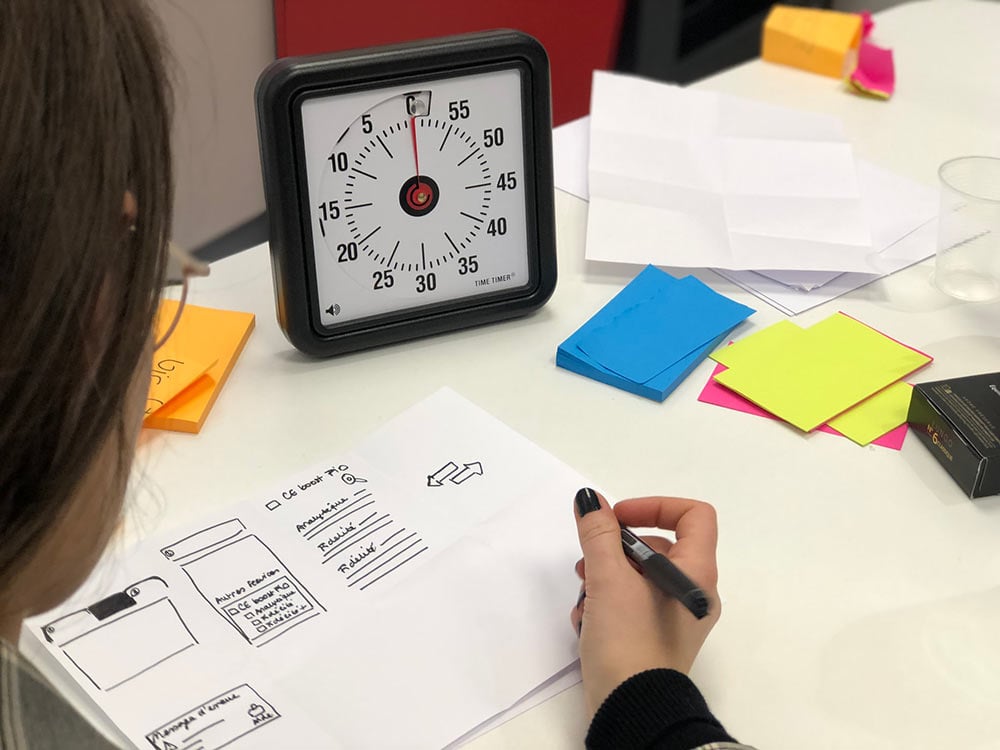 While a lot of the plans for this school year are changing from day to day, one certainty is that many students will be distance learning or experiencing a hybrid model of education. Naturally, families are concerned about how to support their learners. While parents often feel grounded in subject areas like math, reading, or history, or at least have good enough research skills to find helpful instructional videos online, many families feel out of their league when it comes to helping children strengthen their executive function skills, particularly in subjects that posed a challenge during in-person school terms. Quite simply, executive function skills are the skills we use to plan, organize, start, stay focused on, and complete a task. They are essential in every educational subject. The good news is that executive function skills are the same skills that adults employ to be successful in their lives and careers — which means that most parents have the aptitude to support their children as they develop these skills. And in fact, every student benefits from support with executive function skills during
  This is a question that doesn’t always have a quick answer. An Individualized Education Plan (IEP) provides specialized instruction so that a student can access the general education curriculum