By Jessica Yadegaran
Original Source: Contra Costa Times
Think all dyslexics write their letter reversed? Or that they never learn to read, or have less than average intelligence?
Wrong. Husband-and-wife-team Bennett and Sally Shaywitz are pediatric neurologists at Yale University who have dedicated their lives to understanding and advancing treatment for dyslexia.
At the Yale Center for Dyslexia & Creativity, Bennett is a pioneer in the application of functional brain imaging for the study of reading and dyslexia in children and adults; Sally conceptualized the “Sea of Strengths” model, which emphasizes an array of higher critical thinking abilities and creativity surrounding the encapsulated weakness in written language found in dyslexics.
Their combined research has busted most of the myths surrounding this learning disability. Here are five, courtesy of their website, http://dyslexia.yale.edu:
- Myth: Dyslexia is a visual problem. Dyslexics see and write letters backward.
- Truth: Dyslexia is not a visual problem. It is brain-based. Many children reverse their letters when learning to write, regardless of whether they have dyslexia.
- Myth: If you are dyslexic, you can’t be very smart.
- Truth: Wrong. Some of the very brightest people struggle to learn to read. Many gifted people at the top of their fields are dyslexic.
- Myth: Dyslexia only affects boys.
- Truth: Both male and females can be dyslexic. In a study published in 1990 in the Journal of the American Medical Association, the Shaywitz team demonstrated that dyslexia affects comparable numbers of boys and girls. Although more boys are referred by their teachers for evaluation, these referrals tend to reflect the more rambunctious behavior of boys in the classroom.
- Myth: People who are dyslexic are unable to read.
- Truth: Most of the time, children and adults with dyslexia do learn to read. The problem is the effort required to read. Typical readers of the same ability level early on become “fluent” readers so that reading is automatic, fast and pleasurable. In contrast, dyslexics remain “manual” readers who read slowly and with great effort.
- Myth: There are no clues to dyslexia before a child enters school.
- Truth: Since reading is based on spoken language, clues to a possibility of dyslexia are present before a child enters school. Children with dyslexia often have slightly delayed speech, don’t recognize rhyming words, and there is often a family history of reading difficulties. Tests can be performed early on and thus help can be provided and many difficulties can be avoided.
 Have you ever told a friend you loved their shirt, even though you thought it was ugly? Maybe you even said you liked a gift they got you and then returned it a week later…
 It’s never too early to think about
 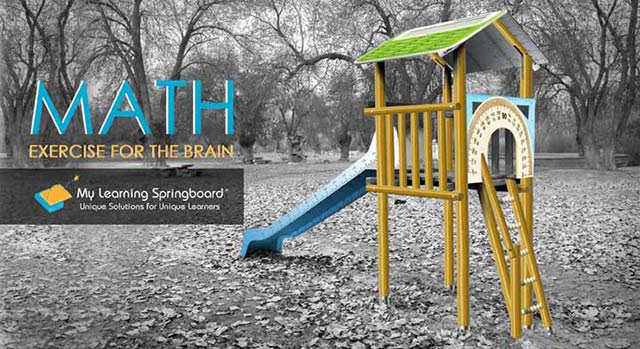 Why do so many students lack interest when it comes to learning math? One student told me that she might have a more intense passion for learning subjects like pre-algebra and geometry if she thought that she would actually need to use what she learned later in life. When asked, “When will I ever need to know this?” it is important to be armed with a motivating response backed by valid examples. Different approaches include referring to specific cases that are tailored to career goals or bringing up more general math scenarios. It is also helpful to make connections to a student’s personal hobbies and interests, and to allow them to explore those
  While students often see the summer as a time to leave the classroom behind and head for the beach, lake, or pool with their friends, I always like to remind them of all the scientific principles they’re unknowingly learning about while cooling off. Whether its simple ideas like the “every action has an equal and opposite reaction” that propels them forward as they push water back, or more complicated concepts like buoyancy that keep us afloat, what they learn in class can inform their understanding of the active world around them.